
Navigating the New Rules of Workforce Deployment in Suriname's Energy Sector
As Suriname's offshore sector accelerates toward first oil, multinational operators face a labour and payroll environment that requires local precision from day one. This white paper outlines why a structured Employer of Record model is the most reliable route to compliant workforce deployment in Suriname's energy sector.
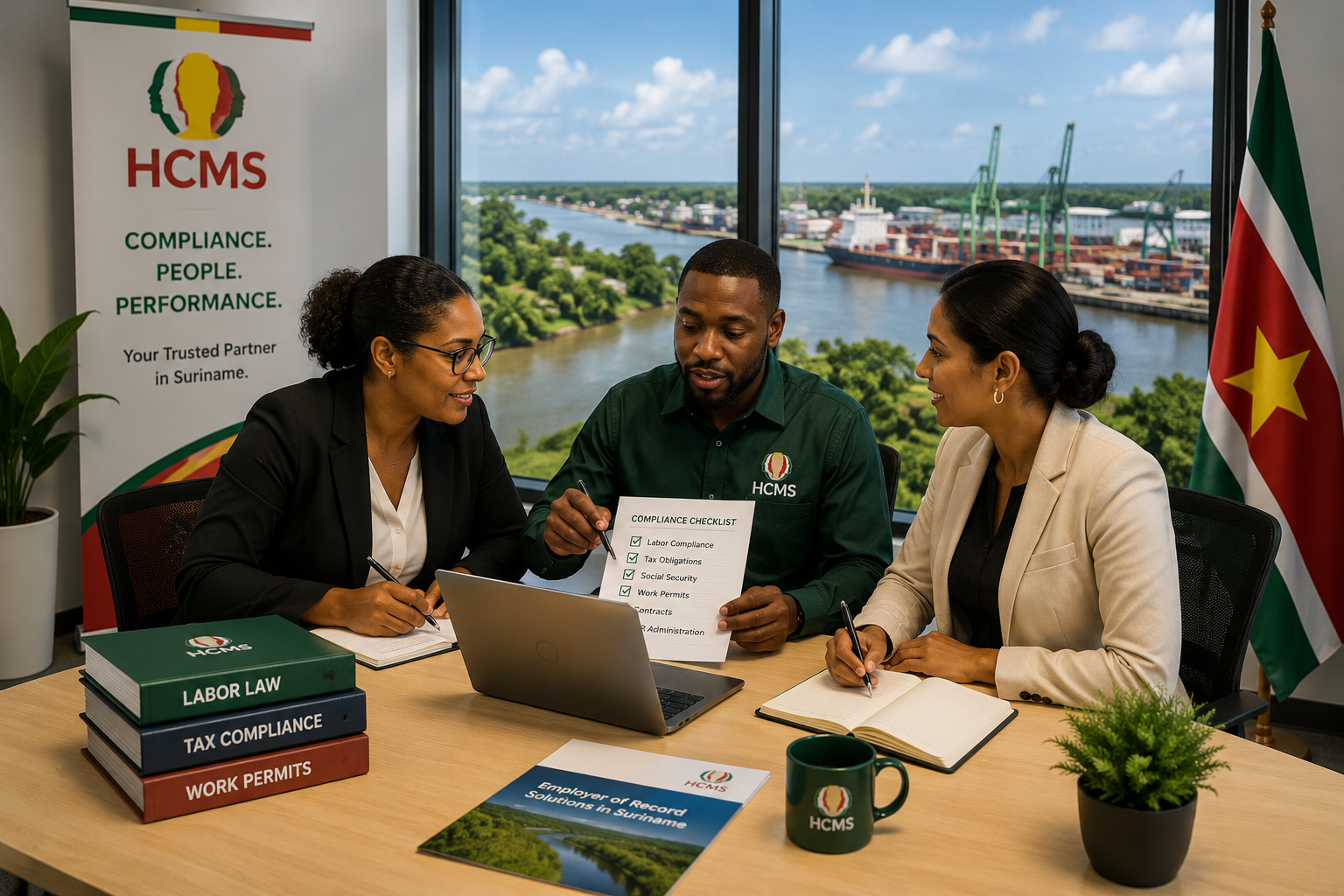
Suriname is no longer just an emerging oil story. The workforce architecture companies build in 2026 will shape cost, compliance, and mobilisation readiness for years to come. Operators and contractors entering the market must align local payroll, tax withholding, permit administration, and statutory benefits before specialised crews begin arriving.
The paper positions the Employer of Record model as the practical way to launch compliant employment operations quickly without waiting to establish a full local entity.
Suriname's labour and social security obligations are layered. Workforce deployment decisions need to account for employer social security, AOV, FVO, BZV, labour tax withholding, work permit processing, and residence permit coordination.
Under an EOR arrangement, HCMS N.V. becomes the legal employer while the client retains operational control. This allows projects to mobilise faster while keeping payroll, social security, tax, and permit obligations within a professionally managed local framework.
The paper also highlights the value of combining EOR with ATLAS concierge support, structured permit administration, and predictable workforce cost planning.
Unstructured employment relationships can create retroactive assessments, penalties, project delays, and reputational damage. Operators that build compliant infrastructure before mobilisation will have a structural advantage as Suriname's energy workforce scales.
Paramaribo, Suriname
Edition I of III · April 2026
Email: info@hcmsnv.com
Phone: +597 431 144
Web: www.hcmsnv.com